Announcement on Revision of Publication Charges

The Editorial Board of Veterinary Research Forum (Vet Res Forum) hereby announces a revision to the journal’s publication charges for both foreign and domestic authors.

Effective for all manuscripts submitted on or after 1 January 2026, the publication fees for accepted articles will be as follows:

For Overseas Authors:

400.00 USD for Review Articles and Original Research Articles

300.00 USD for Clinical Reports and Short Communications

For Domestic Authors:

15,000,000 IRR for Review Articles and Original Research Articles

7,000,000 IRR for Clinical Reports and Short Communications


These revisions have been implemented to help cover the increasing costs associated with the publication process, including professional copyediting, typesetting, and online publication services.

Manuscripts submitted before 1 January 2026 will remain subject to the current publication charges and will not be affected by this change.

The Editorial Board remains firmly committed to maintaining the highest standards of scientific publishing and sincerely appreciates the continued support of its authors, reviewers, and readers.

For further information, please contact the journal office.

Editorial Board of Veterinary Research Forum


Review Articles

The Veterinary Research Forum typically commissions Review Articles. These articles are generally authored by scholars and experts who have published a minimum of five research papers on the relevant topic in national and/or international journals.

If you are interested in writing a Review Article for the Vet Res Forum, we encourage you to contact the Editor-in-Chief before submitting your manuscript. Review Articles should focus on a specific topic that falls within the scope of the journal.


Important announcement

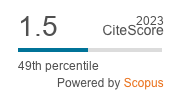
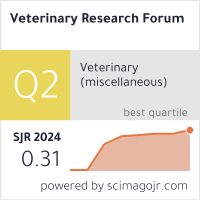
We are delighted to share that the Veterinary Research Forum has achieved notable progress in the 2025 Journal Citation Reports (JCR) and Scopus metrics (SJR).

The journal’s impact factor has increased compared to last year from 0.80 to 1.10, a significant improvement that highlights the growing influence of our publications. Veterinary Research Forum proudly maintains its place in Q3, reflecting our ongoing commitment to quality and relevance in veterinary science.

We are also pleased to announce an improvement in our Scopus SJR, rising from 0.281 to 0.304. This advancement allows us to retain our position in Q2, underscoring the journal’s sustained academic recognition and visibility.
These accomplishments would not have been possible without the dedicated efforts of our authors, reviewers, editors and publishing staff. Your contributions, expertise, and commitment to scientific excellence have been instrumental in driving the journal’s continued progress. We deeply appreciate your role in advancing veterinary research and knowledge dissemination.

Let’s continue this journey together—striving for even greater heights in the coming years!

Editorial Board of Veterinary Research Forum


Honoring Achievement

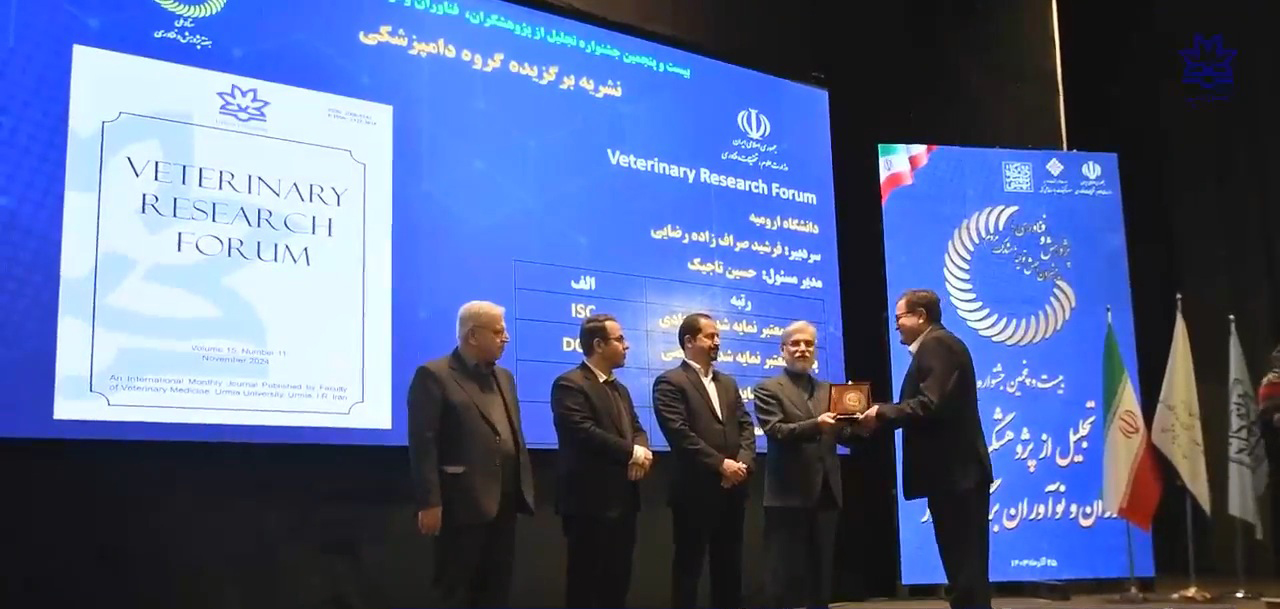
We are delighted to announce the election of Veterinary Research Forum as the top journal in the

25th Festival of Honoring Distinguished Technologists and Innovators.

In this festival, which was held in the presence of the Honorable Minister of Science, Research and Technology, 2024 at the International Conference Center of Shahid Beheshti University Tehran, Iran,
Professor Farshid Sarrafzadeh-Rezaei was honored as the editor-in-chief of the country's top scientific journal. 
 

Important notice 

Respected authors are strongly advised to take the time to read the Guide for Authors, otherwise, submissions not following the Veterinary Research Forum format will not be processed and
the manuscript will be rejected, immediately.


Large Animal Internal Medicine

Glandular gastric disease prevalence in equids (horses, donkeys, and mules) and other gastric findings: post-mortem comparative study

Pages 145-152

Angie Lorena Medina Bolívar, Rafael Resende Faleiros, José Ramón Martinez Aranzales

Abstract Equine glandular gastric disease (EGGD) has limited prevalence studies and scarce understanding of the predisposing factors and pathophysiological mechanisms involved. The objectives of this study were to determine and compare the post-mortem prevalence of EGGD and other gastric lesions in Colombian equids, specifically horses, donkeys, and mules. The study utilized a sample of 300 equids stomachs, with 100 specimens from each group, collected immediately after slaughter. The post-mortem examination included a thorough inspection of the ventral fundus, adjacent area of the margo plicatus, and pyloric antrum of the glandular mucosa, carefully identifying any lesions or abnormalities. The results showed that the overall macroscopic presence of EGGD in the equid population was 68.30% on average, with specific rates of 45.00% in horses, 77.00% in donkeys, and 83.00% in mules, with lesions predominantly affecting the fundus and pyloric antrum regions. Inflammatory processes were observed to be similar between donkeys and horses, while mules exhibited distinct inflammatory patterns in the glandular mucosa. Additional gastric findings, such as gastritis (85.30%), gastric impaction (10.00%), and parasitic infections (13.30%), were also documented during the study. The findings suggested that EGGD was prevalent across all three groups of equids. Although the inflammatory conditions and their distribution were similar in horses and donkeys, differences in the location, frequency, and severity of mucosal lesions were observed among the three species.

Microbiology

Identification of Chlamydia abortus, Coxiella burnetii, and Brucella species from ruminant fetal abomasal contents using molecular methods

Pages 153-160

Ayfer Güllü Yücetepe, Sadiye Dılşa Ateş, Osman Yaşar Tel, Özden Dellal, Oktay Keskin, Ahmet Murat Saytekin, Sibel Kızıl, Ufuk Ülker, Efsun Melike Çeçen, Sevil Erdenliğ Gürbilek

Abstract This study aimed to detect Coxiella burnetii, Chlamydia abortus, and Brucella species in the abomasal contents of aborted ruminant fetuses from the Central Anatolia region of Türkiye using PCR between 2020 and 2023. The abomasal contents of a total of 97 aborted fetuses from cattle, sheep, and goats with a history of abortion, collected between the years 2020 and 2023, were tested in this study. As a result of PCR analysis of 97 abomasal contents, four (4.10%; 95.00% confidence interval [CI]: 1.33 - 10.82) of them were C. abortus, including three sheep and one goat. Two (2.10%; 95.00% CI: 0.36 - 7.96) of them were C. burnetii, including one sheep and one cow. A total of 60 (61.90%; 95.00% CI: 51.40 - 71.37) samples from 47 cattle, nine sheep, and four goats were determined by Brucella genus-specific PCR. Following multiplex PCR analysis of the positive Brucella spp. samples, 39 (65.00%; 95.00% CI: 51.52 - 76.55) samples were identified as B. abortus, including two sheep, one goat, and 36 cattle. Additionally, 19 (31.70%; 95.00% CI: 20.60 - 45.09) isolates were identified as Brucella melitensis, including five sheep, two goats, and 12 cattle. In two sheep samples, both B. melitensis and C. abortus were identified from the same animals. In conclusion, Brucella spp. were the predominant abortion-causing pathogens, with C. abortus also contributing significantly. Effective control strategies under the One Health approach are essential to prevent the uncontrolled spread and inter-species transmission of these zoonotic agents in the region and country.

Biochemistry

Chronological profiling of early pregnancy transcripts in Murrah buffaloes

Pages 161-168

Aman Srivastav, Vijai Singh, Riyaj Ahmed Siddique, Atul Kumar Verma, Akhil Patel, Suresh Kumar, Mahesh Kumar Bharti, Aman Kumar

Abstract Effective reproductive management in cattle, such as cows and buffaloes, requires early and accurate pregnancy detection. Early identification of pregnancy enables farmers to promptly identify non-pregnant animals for treatment and/or rebreeding, thereby reducing the calving interval. This study aimed to standardize the expression of the CCL8 and CXCL10 genes as markers for early pregnancy detection in Murrah buffaloes. Blood samples were collected on the 16th day post-artificial insemination for gene expression analysis and on days zero, seven, 14, and 21 post-artificial insemination for progesterone concentration measurement. Buffaloes were categorized as pregnant (n = 6) or non-pregnant (n = 6) based on the resumption of estrus. Gene expression levels in peripheral blood leukocytes were analyzed using Quantitative Reverse Transcription Polymerase Chain Reaction (qRT-PCR) with SYBR green dye. Amplicons of CCL8, CXCL10, and GAPDH genes were measured 108, 117, and 158 bp, respectively. Results showed that CCL8 mRNA expression in pregnant buffaloes was 5.13 and 12.21 times higher compared to non-pregnant buffaloes, while CXCL10 mRNA expression was 4.19 and 22.17 times higher. These findings indicated significantly elevated CCL8 and CXCL10 mRNA expression levels in peripheral blood leukocytes of pregnant buffaloes on the 16th day. Progesterone levels in the pregnant group were increased significantly from day zero to day 21, while no significant differences were observed between groups on days zero, seven and 14. Pregnancy was further confirmed via per-rectal examination on the 45th day post-artificial insemination Therefore, CCL8 and CXCL10 gene expression profiling on the 16th day could serve as reliable early pregnancy markers in Murrah buffaloes.

Theriogenology

Protective effect of the bee bread on cadmium-induced testicular toxicity in rats

Pages 169-174

Volkan Koşal, Turan Yaman, Çağlar Okulmuş

Abstract Cadmium (Cd) is a highly toxic environmental pollutant known to cause severe damage to the male reproductive system. This study aimed to investigate the protective effects of bee bread (BB), a natural product with anti-oxidant, anti-apoptotic, and anti-inflammatory properties, against Cd-induced testicular toxicity in male Wistar rats. A total number of 32 rats were divided into four groups, including control, BB (0.50 g kg-1), Cd (5.00 mg kg-1), and Cd + BB (5.00 mg kg-1 and 0.50 g kg-1, respectively) groups. Administrations via oral gavage were performed for 4 weeks. Semen analysis revealed significant reductions in sperm motility and density along with increases in abnormal and dead sperm ratios in the Cd and Cd + BB groups compared to controls. Histopathological examination showed severe degeneration and desquamation of germ cells, tubular atrophy, and a decrease in spermatozoa in the Cd-treated groups. Polymerase chain reaction analysis indicated up-regulation of apoptotic markers (caspase-3, -8, and -9) and oxidative stress enzymes (catalase and superoxide dismutase) in the Cd group, signifying disrupted testicular function. The BB administration partially mitigated Cd-induced damage as evidenced by less severe histopathological changes and moderated gene expression alterations. However, the protective effects of BB were not sufficient to completely counteract the toxic impact of Cd. The present study concluded that while BB had potential in reducing Cd-induced testicular toxicity, its protective efficacy was limited, warranting further research to explore its therapeutic potential in combination with other protective agents.

Physiology

Effects of thymoquinone on acute corneal and orofacial pains in rats: central involvement of opioid, cannabinoid, muscarinic cholinergic, and serotonin receptors

Pages 175-181

Esmaeal Tamaddonfard, Amir Erfanparast, Afsaneh Niakani

Abstract Thymoquinone (TQ), the bioactive compound found in black seed, possesses beneficial properties. In the present study, the effects of oral administration of TQ were investigated on acute corneal and orofacial pains in rats. To clarify the central mechanism of action, muscarinic cholinergic, cannabinergic 1 (CB1) and 5-hydroxytryptamine receptor antagonists were delivered into the 4th ventricle of the brain after oral administration of TQ. Acute corneal and orofacial pains were induced by dropping of hypertonic saline (50.00 µL; 5.00 M) on the corneal surface and subcutaneous injection of capsaicin (1.50 µg; 20.00 µL) in the vibrissal pad, respectively. The eye wiping number and face rubbing duration were recorded as corneal and orofacial pains behavioral responses, respectively. Locomotor activity was measured using an open-field test. The TQ (5.00 mg kg-1) had no effects, while it reduced pain responses at 10.00, 20.00, and 40.00 mg kg-1. Intracerebro-ventricular injections of naloxone (an antagonist of opioid receptors), (N-(Piperidin-1-yl)-5-(4-iodophenyl)-1-(2,4-dichlorophenyl)-4-methyl-1H-pyrazole-3-carboxamide (an antagonist of CB1 receptors), atropine (an antagonist of muscarinic cholinergic receptors), and ondansetron (an antagonist of 5-hydroxytryptamine 3 receptors) at a similar dose of 10.00 µg kg-1 inhibited corneal and orofacial pains suppression caused by 40.00 mg kg-1 TQ. The tested drugs did not affect locomotor activity. It is concluded that TQ caused analgesia in the acute corneal and orofacial pains. Central opioid, cholinergic muscarinic, CB1, and 5-hydroxytryptamine 3 receptors might be involved in the anti-nociceptive effects of TQ.

Physiology

Impact of a soybean oil-enriched diet on metabolic parameters in a chick model of childhood obesity

Pages 183-190

Rooja Seifzade, Hossein Jonaidi, Shadi Hashemnia, Reza Kheirandish, Mohamad Zamani-Ahmadmahmudi, Manochehr Yousefi, Parsa Jonaidi, Heshmat Hajhosseini, Mahmoud Salehi, Khavar Adhami, Mehran Pourmashayekhi

Abstract Obese and overeating children are at risk of obesity and its complications in adulthood. Research on childhood obesity encounters numerous challenges in mammals. Broiler chicks are a suitable animal model for studying childhood obesity. Genetically, broiler chicks exhibit high growth rates. They are hyperphagic, hyperglycemic, and capable of accumulating abdominal fat, and their diet can be managed from birth. Soybean oil, which is rich in omega-6 (n-6) polyunsaturated fatty acid linoleic acid and low in omega-3 (n-3) polyunsaturated fatty acid (n-6 : n-3 ratio = 7.50), is widely utilized in human nutrition. However, conflicting findings have been reported regarding the efficacy of this oil in humans and rodents. Effects of a soybean oil-enriched diet (4.00% total fat as a control vs. 11.00% total fat as a treatment) on metabolic disorders in broiler chicks were evaluated from hatching to 36 days of age. Results showed no changes in food intake, body weight, appetite-regulating neuro-peptide mRNA levels, blood triglycerides, or hematological parameters. In contrast, the relative abdominal fat, blood cholesterol, aortic wall thickness, intima layer, and area of fat cells increased significantly in treatment group compared to control group. Signs of liver fat infiltration (steatosis) and changes in the aortic intima layer, including increased distance between elastin fibers, were observed. In conclusion, in middle-term-fed broiler chicks, a model for childhood obesity using soybean oil high in omega-6 polyunsaturated fatty acids leads to early atherosclerosis, fatty liver, adipose dysfunction, and hypercholesterolemia, without impacting body weight or food intake.

Microbiology

Molecular investigation of biofilm-forming genes in staphylococci isolated from dogs in Ilam, Iran

Pages 191-197

Negar Soltani, Mostafa Nemati, Fazel Pourahmad

Abstract Biofilm formation is a key virulence factor in Staphylococcus aureus, contributing to bacterial persistence, antimicrobial resistance, and chronic infections. This study aimed to investigate the presence of biofilm-associated genes (fib, fnbA, fnbB, clfA, and clfB) in S. aureus isolates from dogs in Ilam, Iran. From December 2022 to September 2023, 250 swab samples were collected from nasal, oral, and rectal sites of dogs, yielding 81 S. aureus isolates confirmed by PCR amplification of the nuc gene. The prevalence of biofilm-associated genes varied, with clfA, clfB, and fnbA detected in 98.80% of isolates, fib in 63.00%, and fnbB in 16.00%. Notably, fnbA, clfA, and clfB were present in all rectal isolates, while fnbB was absent in this group. The findings highlighted the widespread presence of biofilm-related genes in S. aureus from dogs, suggesting their potential role in colonization and zoonotic transmission. The high prevalence of adhesion-associated genes underscored the need for monitoring biofilm-forming S. aureus in companion animals to mitigate antimicrobial resistance and public health risks.

Parasitology

Assessment of oxidative stress biomarkers in liver fluke Dicrocoelium dendriticum following exposure to copper oxide and zinc oxide nanoparticles

Pages 199-205

Morteza Ghanbari, Farnaz Malekifard, Bijan Esmaeilnejad, Mehdi Fakhar

Abstract Dicrocoeliasis is a globally significant condition impacting both economic and public health. The lack of effective vaccines and emergence of drug-resistant flukes have prompted research into alternative treatments. Metallic nanoparticles have recently been studied for their potential as anthelmintic agents. This research examined the in vitro anthelmintic activity of copper oxide (CuO-NPs) and zinc oxide nanoparticles (ZnO-NPs) against Dicrocoelium dendriticum. Using adult motility inhibition tests and oxidative stress biomarkers, including glutathione peroxidase , glutathione S-transferase , superoxide dismutase , and malondialdehyde , this study evaluated the effects of CuO-NPs and ZnO-NPs. Flukes were treated with various concentrations of nanoparticles (1.00, 4.00, 8.00, 12.00, and 16.00 ppm) for 24 hr. The CuO-NPs and ZnO-NPs demonstrated concentration- and time-dependent anthelmintic activity. Higher concentrations (12.00 and 16.00 ppm of CuO-NPs, and 16.00 ppm of ZnO-NPs) significantly inhibited worm motility compared to the controls. The nanoparticles induced oxidative stress in the flukes, with decreased superoxide dismutase, glutathione S-transferase, and glutathione peroxidase activities and increased malondialdehyde levels. Based on these findings, CuO-NPs and ZnO-NPs exhibit potential as therapeutic agents for controlling and treating D. dendriticum. However, further studies are necessary to assess their safety and efficacy in vivo for managing parasitic infections.

Poultry

Genetic diversity of H9N2 avian influenza viruses in Iran over the past two decades

Pages 206-215

Mohsen - Bashashati, Soroush Geramitabar, Setareh Banani, Leila Moradihaghgou, Fereshteh Sabouri

Abstract Numerous studies have explored the molecular epidemiology of H9N2 viruses in Iran; however, continuous monitoring remains vital for timely interventions to mitigate potential damage. This study examined the molecular characteristics and evolutionary features of Iranian H9N2 viruses by sequencing the complete genomes of two viruses, Marand and Baneh, isolated in 1998 and 2022, respectively, alongside other Iranian strains from GenBank. All Iranian viruses were identified as low-pathogenic avian influenza viruses, as evidenced by the presence of the di-basic motif K/RSSR cleavage site. Notably, all Iranian viruses isolated from 2009 onward had an L at position 216 in the hemagglutinin receptor binding site, whereas earlier viruses exhibited a Q/L at the same position, an essential mutation that enhances replication in mammalian cells. The molecular evolutionary rates for the Iranian hemagglutinin (HA) and neuraminidase (NA) genes were estimated at 4.50 × 10⁻³ and 3.60 × 10⁻³ substitutions per site per year, respectively. Error-prone replication of H9N2 viruses has resulted in the continuous evolution of Iranian strains over two decades, characterized by three phases of population growth. Maximum likelihood phylogenetic analysis revealed that the HA and NA genes of H9N2 viruses from domestic chickens belonged to the G1 sublineage. Additionally, the internal genes of some viruses displayed evidence of reassortment with other subtypes, indicating potential gene exchange with other viruses. These findings underscored the importance of ongoing surveillance of H9N2 viruses in both domestic and wild bird populations, given the human-like receptor-binding preference and the possibility of genetic reassortment with various viral subtypes.

Theriogenology

Enriching egg yolk fractions-tris-based extenders with cow skimmed milk improved the cryopreservation of bull sperm

Pages 217-223

Farhad Samadian, Farhad Farrokhi-Ardabili, Mohammadhasan Neteghahmadi, Mostafa Ghaderi Zefrehei

Abstract The effects of substituting whole egg yolk (WEY) in a tris-citrate-based extender with two derived fractions, including a buffer-soluble fraction (BSF) and an ammonium sulfate insoluble yolk fraction, on the freezability of bull sperm were investigated. The BSF and ammonium sulfate insoluble yolk fraction levels of egg yolk in the respective diluents were consistent with their extracted values from an equivalent volume (20.00%) of egg yolk in the control diluent. The extenders were then enriched with 0.00, 5.00, and 10.00% (v/v) of pasteurized skim milk. Semen samples were collected weekly over five consecutive weeks from six adult bulls, and the standard ejaculates were pooled. The pooled semen was subsequently divided into seven experimental extenders and frozen in 0.50 mL French straws. Various sperm quality parameters, including kinematics, acrosome integrity, capacitation, and DNA fragmentation, were evaluated post-thawing. Results indicated that sperm kinematics and the percentage of acrosome-reacted sperm in experimental extenders were not significantly different from those in the control group. The milk-free ammonium sulfate insoluble yolk fraction extender exhibited higher percentages of capacitated sperms, but lower percentages of spermatozoa with intact DNA compared to the WEY extender sperm. The addition of 10.00% milk into the BSF diluent resulted in a significant increase in the proportion of sperm with intact DNA and a notable decrease in the percentage of sperm with partially fragmented DNA compared to the control. In conclusion, a BSF extender enriched with 10.00% cow's skimmed milk is recommended as a substitute for WEY in the cryopreservation of bull semen. 

Parasitology

In vitro giardiacidal effects of Ziziphus vulgaris L. and Camellia sinensis (L.) extracts on Giardia duodenalis cysts

Articles in Press, Accepted Manuscript, Available Online from 25 October 2025

Kamal Taheri Lak, Farnaz Malekifard, Mohammad Yakhchali

Abstract There is an increasing interest in exploring plant extracts as potential new treatment options for these ailments. Ziziphus vulgaris L. and Camellia sinensis (L.) Kuntze are medicinal plants widely used in different traditional medical practices, especially in Iranian Traditional Medicine, for addressing a range of health issues. Although their biological properties are well-established, their effectiveness against Giardia duodenalis cysts is still uncertain. This research aimed to assess the impact of Z. vulgaris and C. sinensis extracts on G. duodenalis cysts in vitro and to compare their effectiveness with metronidazole. Cysts were extracted from stool samples and concentrated using a 0.85 M sucrose solution. Extracts of Z. vulgaris and C. sinensis were prepared at concentrations of 25, 50, and 100 mg mL-1. The impacts of these extracts at different concentrations were evaluated at 10, 15, 30, 60, and 180 min, and the results were compared to control groups. The collected data were documented and statistically analyzed. The findings revealed that Z. vulgaris extract at a concentration of 100 mg mL-1and C. sinensis extract at a concentration of 50 mg mL-1 showed similar effectiveness to metronidazole in eliminating Giardia cysts. In addition, the cytotoxic effects of Z. vulgaris and C. sinensis extracts, in comparison to metronidazole, indicated a rise in fatality rates with prolonged exposure times and higher extract concentrations (p < 0.05). Therefore, it can be concluded that extracts of Z. vulgaris and C. sinensis are as effective as metronidazole for killing Giardia cysts in vitro.

Theriogenology

Tannic Acid Ameliorates Sperm Quality and Testicular Damage in a Rat Model of Ischemia-Reperfusion

Articles in Press, Accepted Manuscript, Available Online from 15 November 2025

Hosna Ghaemi, Ali Soleimanzadeh, Rahim Mohammadi, Ali Shalizar

Abstract This study evaluated the protective effects of intraperitoneal tannic acid (TA) against ischemia-reperfusion (I/R) injury in a rat model of testicular torsion. Eighteen adult male Wistar rats were randomized into three groups (n=6 each): sham (surgery without ischemia), I/R (3 hr ischemia + 3 hr reperfusion), and I/R+TA (TA 50 mg kg-1; 100 µL i.p. 30 min before reperfusion). Testicular tissues were sampled immediately after reperfusion for biochemical assays to measure malondialdehyde (MDA), superoxide dismutase (SOD), and glutathione peroxidase (GPx) levels. Epididymides were analyzed 60 days later for sperm count, motility, viability, morphology, and DNA integrity. I/R significantly elevated MDA and sperm DNA damage while reducing SOD, GPx, sperm parameters, testicular weight and spermatogenesis. TA administration reversed these changes and restored the parameters to levels close to those of the sham group. Overall, intraperitoneal TA mitigated I/R-induced oxidative stress and preserved reproductive function, indicating its potential therapeutic value in testicular torsion.

Microbiology

In vitro Synergistic Efficacy of Postbiotics and Specific IgY Antibodies against Mycobacterium avium subsp. Paratuberculosis; Etiological Agent of Johne’s Disease

Articles in Press, Accepted Manuscript, Available Online from 17 November 2025

Mera Sharif, Naheed Mojgani, Nader Mosavari, Fattah Sotoodehnejad Nematalahi

Abstract Mycobacterium avium subspecies paratuberculosis (MAP), the causative agent of Johne’s disease and a potential contributor to Crohn’s disease, presents a significant challenge due to its resistance to conventional antibiotics. This necessitates the development of innovative strategies for prevention and treatment. This study aimed to evaluate the antibacterial activity of pathogen-specific antibodies derived from chicken egg yolks (IgY) and the postbiotics from lactic acid bacteria against MAP. Immunoglobulin Y antibodies were produced by immunizing hens with formalin-killed MAP strain antigens. The IgY was extracted, purified, and the anti-MAP titers were quantified by indirect ELISA. The Minimum Inhibitory Concentration (MIC) of different concentrations of specific anti-MAP IgY and the mixture of postbiotics (from four different probiotic strains Lactobacillus reuteri, Lactobacillus rhamnosus, Lactobacillus acidophilus, and Pediococcus acidilactici) individually and in combination against MAP was determined at various time intervals. Anti-MAP IgY titers in egg yolks increased within two weeks of immunization, reaching peak levels at six weeks. Growth inhibition assays revealed that postbiotics concentration as low as 6.25 mg mL-1 effectively inhibited MAP growth. Anti-MAP IgY demonstrated antibacterial activity with a MIC of 50 mg mL-1, while the combined IgY-posbiotics treatment achieved MAP growth inhibition at a MIC of 3.125 mg mL-1. The findings of the study suggests that combination therapy with specific IgY and postbiotics may be a promising preventive strategy for controlling MAP infections. Further in vivo studies are needed to elucidate the underlying mechanisms and optimize the application of this approach for broader use in veterinary and human medicine.

Small Animal Surgery

Effects of intraperitoneal administration of Kisspeptin-10 on ischemia-reperfusion injury in a rat testicular torsion and detorsion model

Articles in Press, Accepted Manuscript, Available Online from 31 December 2025

Niki Karvani Dilmaghani, Mehdi Behfar, Ali Soleimanzadeh, Farshid Davoodi

Abstract Testicular ischemia-reperfusion (I/R) injury during testicular torsion is strongly influenced by oxidative stress caused by excessive accumulation of uncaptured reactive oxygen species (ROS). Kisspeptin-10, a biologically active fragment of the kisspeptin peptide family, has demonstrated significant antioxidant and anti-apoptotic properties. Recent studies indicate that kisspeptin-10 can mitigate oxidative stress by reducing reactive oxygen species levels and enhancing the activity of endogenous antioxidant enzymes such as superoxide dismutase (SOD) and catalase. This study examined the effects of kisspeptin-10 on I/R injury in testicular torsion/detorsion (T/D) of male rats. Twenty male rats were divided into four groups: the control group and three treatment groups (720° T/D, 720° T/D+ 0.50 µg kg-1 kisspeptin-10, 720° T/D+ 1.00 µg kg-1 kisspeptin-10). After inducing 720° clockwise testicular torsion for 2 hr, various factors such as sperm parameters, number, total motility, viability, DNA damage and hypoosmotic test were evaluated. The results showed that 720° T/D can increase sperm DNA damage. In addition, it also had negative effects on overall motility and other properties such as viability and plasma membrane functionality. The results also showed that administration of kisspeptin-10 to T/D rats can reduce DNA damage. These effects could also increase overall motility, viability and plasma membrane functionality compared to the T/D group. Based on our results, kisspeptin-10 provides significant protection against acute T/D injury to the testis when administered after spermatic cord torsion in rat.

Clinical Pathology

Epidemiological and Compositional Analysis of Urinary Bladder Stones in Dogs and Cats: A Five-Year Retrospective Study

Articles in Press, Accepted Manuscript, Available Online from 28 January 2026

Hamed Mansoor Lakooraj, Mohammad Honarjoo, Siamak Zarei, Mana Moheimani

Abstract This study provides a comprehensive analysis of 145 urinary bladder stone cases diagnosed in dogs and cats over a five-year period at a private veterinary hospital. The aim was to evaluate demographic patterns, urolith composition, and species-specific trends to enhance understanding and improve management of urolithiasis in companion animals. A retrospective study was conducted on clinical records, including patient demographics (species, breed, age, sex), urolith composition, and stone size. Chemical composition of uroliths was determined using qualitative chemical analysis. Statistical analyses were performed to identify significant associations between patient demographics and urolith composition.
Of the 145 cases, 80 were dogs (55.2%) and 65 were cats (44.8%). In dogs, calcium oxalate stones predominated (65%), followed by struvite stones (30%) and mixed compositions (5%). Conversely, cats exhibited a higher prevalence of struvite stones (55%), with calcium oxalate accounting for 40% and mixed stones for 5%. Larger stones (10–20 mm) were more common in female dogs, while cats generally presented with fewer and smaller stones. No statistically significant temporal trend in urolith composition was observed for either species during the study period. Stone color distribution varied by species, with cream and brown stones being most common in dogs and cats, respectively.
This study establishes baseline epidemiological data on urolithiasis for this region, revealing significant species-specific differences in stone composition. The high prevalence of calcium oxalate in dogs and struvite in cats highlights the need for tailored clinical management and provides a crucial benchmark for future regional and global comparative studies.

Parasitology

The effectiveness of Harmaline along with meglumine antimoniate on Leishmania major

Articles in Press, Accepted Manuscript, Available Online from 28 January 2026

Mahin Ghafourzadeh, Mohammad Mirzaie, Iraj Sharifi, Alireza Keyani, Ehsan Salarkiya

Abstract Leishmaniasis, a disease caused by Leishmania species and transmitted via sandflies. Current control strategies against reservoir hosts and vectors are not eco-friendly. Using Harmaline (HA) from Peganum harmala, and meglumine antimoniate (MA) could be a promising therapy. The study aimed to explore the potential treatment outcomes and action mechanisms of HA and MA against L. major stages by investigating their effectiveness through molecular docking, anti-leishmanial effects, safety assessment, and apoptotic profile evaluation. According to the molecular docking results, the PLIP ligand interaction profiler (PLIP) identified that Bcl2 interacts with HA mainly through hydrogen bonds, while Bax uses both hydrogen and hydrophobic interactions, indicating a stronger binding of HA to Bax compared to Bcl2. HA, combined with MA (HA/MA) showed potent anti-leishmanial activity without toxicity. In vitro studies significantly demonstrated that HA inhibited the growth of promastigotes and amastigotes. HA/MA was more effective in inhibiting parasite growth. Based on the study findings, HA and HA/MA mixture can be considered a viable treatment option for cutaneous Leishmaniasis.

Large Animal Internal Medicine

Therapeutic Effects of Ethanol Extract of Propolis on Experimental Cutaneous Candidiasis in Horse

Articles in Press, Accepted Manuscript, Available Online from 13 April 2026

Sayyed Zakaria Mahmoodi, Vahid Najarnezhad, Ghader Jalilzadeh-Amin, abdolghafar ownagh, Navideh Mirzakhani

Abstract Candida albicans is a commensal opportunistic yeast colonizing the skin and mucosal surfaces of humans and animals, which, under specific predisposing conditions, can proliferate excessively and lead to clinical manifestations of candidiasis. The widespread prophylactic and therapeutic use of antifungal agents has led to the emergence of drug-resistant strains, necessitating the exploration of novel therapeutic alternatives. Considering the clinical and conformational significance of equine skin health, the present study aimed to evaluate the therapeutic efficacy of ethanol extract of propolis in an experimental model of cutaneous candidiasis in horses. In 2022, two clinically healthy, six-year-old female horses (approximately 400 kg) were selected for the study. Immunosuppression was induced using dexamethasone and four intradermal inoculation sites were created on the shaved thoracic and flank regions of both lateral aspects using C. albicans (CPTC: 5027) suspension (5 × 10⁶ CFU mL-1). The experimental sites on the right thorax were treated with ethanol extract of propolis while those on the left thorax received topical nystatin. Lesions on the right flank were treated with glycerin as a vehicle control, and lesions on the left flank were left untreated. Cutaneous candidiasis was successfully induced within five days post-inoculation. Clinical resolution was observed following five days of treatment with ethanol extract of propolis, whereas, nystatin required eight days to achieve complete lesion resolution. The findings of this study suggested that topical ethanol extract of propolis demonstrated superior efficacy in accelerating the resolution of C. albicans-induced cutaneous lesions in horses compared to nystatin.

Surgery

Evaluation of chemical castration by intra-testicular injection of zinc-doped carbon dots in mature rats

Volume 16, Issue 12, December 2025, Pages 681-689

Mohammad Hossein Farjah, Mehdi Behfar, Ali Soleimanzadeh, Ali Shalizar-Jalali, Rahim Molaei

Abstract Sterilization in animals serves multiple purposes, such as behavior control, performance improvement, and population management. Chemical sterilization has emerged as a promising non-surgical alternative to traditional methods. This study aimed to investigate the effects of intra-testicular injection of zinc-doped carbon dots (Zn-CDs) nanoparticles as a chemical sterilant in mature rats. Twenty-five rats were randomly divided into five groups, including a control group without injection, a sham group receiving 0.50 mL distilled water, and three treatment groups administered respectively 0.50, 2.00, and 8.00 mg kg-1 of Zn-CDs synthesized through a hydrothermal process. Following anesthesia with ketamine and xylazine, and aseptic preparation, intra-testicular injections were administered bilaterally. At 60th day post-injections, blood samples were collected to measure serum testosterone levels using chemiluminescence immunoassay. The rats were then surgically castrated to assess sperm parameters and testicular histopathology. Testicular oxidant/anti-oxidant status was also evaluated. The results revealed a dose-dependent reduction in sperm viability, membrane integrity, and motility, accompanied by increased sperm DNA damage. The highest Zn-CDs dose caused the most significant decrease in sperm concentration, as well as severe testicular tissue damage. In addition, anti-oxidant capacity, seminiferous tubules maturation, testosterone production, and spermatogenesis declined with increasing Zn-CDs concentrations in a dose-dependent manner. These findings indicate that intra-testicular injection of Zn-CDs effectively induces infertility in mature rats and holds potential as a chemical sterilization method. With further studies to evaluate safety and efficacy, this approach could be developed as a practical solution for large-scale in situ castration, offering a non-surgical alternative for over-population control programs.

Microbiology

In vitro physicochemical characterization of nephropathogenic strain of infectious bronchitis virus isolated from poultry

Volume 16, Issue 12, December 2025, Pages 675-680

Kamran Saaed, Faisal Ayub, Muhammad Arshad Durrani, Abdul Rafay, Mobashra Mustafa, Irtaqa Gull, Zahra Rafi, Muhammad Kashan Ansari, Muhammad Mubashar Beig, Abdul Razak, Hafiz Muhammad Moavia Atique

Abstract Infectious bronchitis virus (IBV) is an important pathogen in the poultry industry causing avian infectious bronchitis that is, an acute but highly contagious disease affecting the upper respiratory tract, kidneys and reproductive tract. The 3rd passage of a polymerase chain reaction confirmed nephropathogenic IBV isolate was used for this study. Heat stability for 5, 10, 15, 20, and 30 min at 56.00 ˚C, pH sensitivity at pH 3.00, 7.00, 9.00, and 11.00 ultraviolet (UV) irradiation for 10, 15, 20, and 30 min, and chloroform sensitivity were studied. The IBV isolate was found to be susceptible to a temperature of 56.00 ˚C for 5 min and above, UV irradiation within 10 min, chloroform treatment and to pH 11.00 while being resistant to pH 3.00 and 9.00. The second part of the study investigated in vitro effectiveness of the disinfection potential of several commercially used disinfectants in Pakistan against the IBV isolate. For this purpose, Virkon S, Bromosept, and Beloran were employed for the virus inactivation test. Following the IBV challenge for contact time of 1, 5, 10, and 30 min, we counted the number of embryos that died after incubation. Results showed that suitable dilution of disinfectant for the recommended contact period could kill the virus. The maximum susceptibility was seen in the case of Virkon S which killed the virus in just 1 min. Thus, IBV could be killed using commercially available Virkon S, Beloran, and Bromosept after being used in recommended concentrations for recommended contact time.

Small Animal Internal Medicine

Severe hepatic lipidosis in a dog: a case report

Volume 16, Issue 12, December 2025, Pages 719-723

Farzin Abbasi, Alireza Jafarbeglou, Siamak Asri-Rezaei, Seyede Soraya Mahmoudi, Farshid Davoodi, Abbas Raisi

Abstract Hepatic lipidosis (fatty liver) is a rare condition in dogs, primarily caused by improper feeding and care practices. It involves the accumulation of triacylglycerols in hepatocytes due to various toxic factors and dietary carbohydrate deficiencies. This case report describes the clinical, hematological, and pathological findings of an abandoned 8-year-old dog suffering from hepatic lipidosis that was referred to an animal shelter. The dog was unconscious, immobile, depressed, and severely obese. Pronounced abdominal distension and icteric mucous membranes were immediately noticeable during the initial examination. A blood sample was collected, and the case was referred to a veterinary hospital for diagnostic imaging. Unfortunately, before the referral could be completed, the dog suddenly died. Immediately following the death, a postmortem necropsy was performed to determine the cause. Necropsy revealed an extremely enlarged liver with a yellowish discoloration and abnormal kidneys with nodular lesions. Based on these findings, fatty liver was strongly suspected. Complete blood count and biochemical parameters, including triglycerides, cholesterol, aspartate transferase, alanine transaminase, and alkaline phosphatase, were subsequently evaluated. Complete blood count results indicated leukocytosis, thrombocytopenia, and an increase in red cell distribution width. Biochemical analyses revealed hypertriglyceridemia and elevated levels of alanine transaminase, aspartate transferase, and alkaline phosphatase. Histopathological examination confirmed severe fatty degeneration in the liver, alongside marked degenerative and necrotic changes in the kidneys. The findings of the present study contribute to the limited data on canine hepatic lipidosis and underscore the necessity of raising awareness about its clinical presentation, diagnostic markers, and histopathological characteristics.

Theriogenology

Effects of human chorionic gonadotropin on reproductive outcomes in estrus-synchronized ewes subjected to two different insemination methods

Volume 16, Issue 12, December 2025, Pages 707-711

Jing Zhang, Yiyong Liu, Nana Yang, Shuyuan Sun, Xiangyun Li, Xinglong Wu

Abstract This study compared the effects of a dose of human chorionic gonadotropin (hCG) administration at the time of insemination on the reproductive outcome of estrus-synchronized Mongolian ewes subjected to two artificial insemination methods during the breeding season. All females were treated with a polyurethane intravaginal sponge impregnated with 45.00 mg of flurogestone acetate for 12 days, followed by an intramuscular injection of 330 IU of equine chorionic gonadotropin at sponge removal. In Experiment 1, 150 ewes were inseminated using a laparoscopic intrauterine artificial insemination method 48 hr after sponge removal. The ewes were randomly assigned to the hCG group which received 500 IU of hCG at the time of insemination, and the control group which received 1.00 mL of sterile saline solution. In Experiment 2, 85 ewes were inseminated twice at 48 and 60 hr after sponge removal using a cervical artificial insemination method. The ewes were randomly assigned to the hCG group, which received 500IU of hCG at the time of the first insemination and the control group which received 1.00 mL of sterile saline solution. The pregnancy rate in the control group was not significantly different compared to the hCG group in Experiment 1 and the pregnancy rate in the control group was significantly higher compared to the hCG group in Experiment 2. In conclusion, the administration of hCG at the time of insemination could not be recommended in ewes when implementing a fixed time artificial insemination protocol during the breeding season.

Poultry

Evaluation of safety and humoral immunogenicity of inactivated Newcastle disease virus genotype VII entrapped in calcium phosphate nanoparticles in chickens

Volume 16, Issue 12, December 2025, Pages 699-706

Bita Darabi-Aref, Tara Emami, Mohammad Abdoshah, Mohsen Mahmoudzadeh-Akhijahani, leila Pishraft-Sabet

Abstract Newcastle disease (ND) is a highly contagious and severe disease that affects birds, including domestic poultry, causing significant economic losses to the poultry industry. The disease is caused by the ND virus (NDV). Despite extensive vaccination efforts against NDV, controlling the disease remains challenging, primarily due to the emergence of new genotypes. Recent attention has focused on calcium phosphate nanoparticles (CaP NPs) as promising adjuvants for vaccines. This study aimed to design and construct CaP NPs containing inactivated NDV genotype VII and evaluate their safety and humoral immunogenicity in chickens. Following virus propagation in specific-pathogen-free eggs and inactivation with formalin, CaP NPs containing inactivated NDV were prepared using in situ and adsorption methods. The NPs were characterized for shape, size, polydispersity index and surface charge. Chickens were immunized subcutaneously with CaP NPs containing inactivated NDV and the humoral immune response against NDV was assessed using HI and enzyme-linked immunosorbent assays. Results showed a significant increase in the mean antibody titer against NDV in chickens treated with both NP structures compared to control groups. No significant difference was observed between the two NP preparation methods. The safety of CaP NPs containing inactivated NDV was confirmed. However, mucosal immunization with these NPs did not yield satisfactory results indicating the need for further research. Overall, this study confirmed the positive role of CaP as an adjuvant in enhancing the humoral immune response against NDV via injection and highlighted the need for continued research on mucosal immunization with the NPs.

Pathology

Mammary comedocarcinoma in a rabbit

Volume 16, Issue 12, December 2025, Pages 725-728

Ghasem Farjanikish, Saman Salmani, Mohammadhossein Abbasi, Mohammadreza Bayat, Erfan Vali

Abstract A 4.5-year-old, nulliparous female New Zealand White Rabbit (Oryctolagus cuniculus) was presented for evaluation of a mammary mass located in right axillary mammary gland. The surgically excised mammary mass was submitted for histopathological and immunohistochemical evaluation. Histopathologically, neoplastic cells were arranged in sheets and nests of irregular sizes. The tissue was composed of amorphous eosinophilic material and necrotic cells. The neoplastic cells had round to oval nuclei with prominent nucleoli, scant basophilic cytoplasm and high mitotic activity. Cytokeratin and vimentin expressions of neoplastic cells were observed in immunohistochemical findings. Based on the microscopic characteristics and immunohisto-chemical staining, a diagnosis of a non-invasive comedocarcinoma was established. In this case, cytokeratin positivity confirmed the epithelial origin, whereas the vimentin positivity supported the presence of epithelial-mesenchymal transition and/or increased malignancy.

Histological investigation of amygdala in horned and hornless ewes

Volume 17, Issue 1, January 2026, Pages 1-8

Burhan Yarar, Cengiz Ozturk, Mehmet Dumlu Aydın, Osman Nuri Keles

Abstract The amygdala is the nucleus of the brain that is largely responsible for perceiving danger and plays a role in emotion, behavior, control and learning. A small amygdala has been associated to aggression. Horned ewes are expected to be more aggressive and have a smaller amygdala. Both horned and hornless ewes exhibit intraspecific head-butting behavior and both species are at risk for traumatic brain injury. The aim of this study was to investigate the neuronal density, glial cells and blood-brain barrier (BBB) of the amygdala in horned and hornless ewes. Four horned and six hornless ewe heads (age: 16.00 ± 4.00 months) were obtained from the abattoir. The brains were carefully removed and preserved in 10.00% formalin for 5 days. Bilateral amygdalae were sectioned. The samples were stained with Hematoxylin and Eosin, immunohistochemical (glial fibrillary acidic protein) and Terminal deoxynucleotidyl transferase deoxyuridine triphosphate nick end labeling methods, and the histological structures of the amygdala were examined by light microscopy. The Mann-Whitney U test was used to analyze the data. Neuronal density was estimated to be 143,230 ± 12,540 per mm3 in horned and 152,230 ± 18,430 per mm3 in hornless ewes. Horned subjects had reduced numbers of neurons, damaged BBB and localized inflammatory areas. More apoptotic neurons were observed in horned ewes. Further studies are needed to determine whether these differences in neuronal density, glial cells, and BBB are acquired (due to trauma) or congenital. The results of this study might need further similar studies to be conducted in the future.

Journal Metrics (Real-time)

Acceptance Rate: 16

Number of Submissions: 4,032

Number of Contributors: 3,543

Accepted Submissions: 661

Article View: 1,496,024

PDF Download: 1,075,373

Time to Accept (Days): 139

Number of Indexing Databases: 28

Number of Reviewers: 2637

Publication Information

Keywords Cloud