Announcement on Revision of Publication Charges

The Editorial Board of Veterinary Research Forum (Vet Res Forum) hereby announces a revision to the journal’s publication charges for both foreign and domestic authors.

Effective for all manuscripts submitted on or after 1 January 2026, the publication fees for accepted articles will be as follows:

For Overseas Authors:

400.00 USD for Review Articles and Original Research Articles

300.00 USD for Clinical Reports and Short Communications

For Domestic Authors:

15,000,000 IRR for Review Articles and Original Research Articles

7,000,000 IRR for Clinical Reports and Short Communications


These revisions have been implemented to help cover the increasing costs associated with the publication process, including professional copyediting, typesetting, and online publication services.

Manuscripts submitted before 1 January 2026 will remain subject to the current publication charges and will not be affected by this change.

The Editorial Board remains firmly committed to maintaining the highest standards of scientific publishing and sincerely appreciates the continued support of its authors, reviewers, and readers.

For further information, please contact the journal office.

Editorial Board of Veterinary Research Forum


Review Articles

The Veterinary Research Forum typically commissions Review Articles. These articles are generally authored by scholars and experts who have published a minimum of five research papers on the relevant topic in national and/or international journals.

If you are interested in writing a Review Article for the Vet Res Forum, we encourage you to contact the Editor-in-Chief before submitting your manuscript. Review Articles should focus on a specific topic that falls within the scope of the journal.


Important announcement

We are delighted to share that the Veterinary Research Forum has achieved notable progress in the 2025 Journal Citation Reports (JCR) and Scopus metrics (SJR).

The journal’s impact factor has increased compared to last year from 0.80 to 1.10, a significant improvement that highlights the growing influence of our publications. Veterinary Research Forum proudly maintains its place in Q3, reflecting our ongoing commitment to quality and relevance in veterinary science.

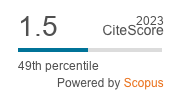
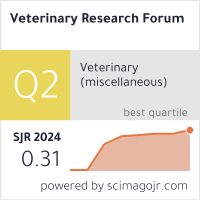
We are also pleased to announce an improvement in our Scopus SJR, rising from 0.281 to 0.304. This advancement allows us to retain our position in Q2, underscoring the journal’s sustained academic recognition and visibility.
These accomplishments would not have been possible without the dedicated efforts of our authors, reviewers, editors and publishing staff. Your contributions, expertise, and commitment to scientific excellence have been instrumental in driving the journal’s continued progress. We deeply appreciate your role in advancing veterinary research and knowledge dissemination.

Let’s continue this journey together—striving for even greater heights in the coming years!

Editorial Board of Veterinary Research Forum


Honoring Achievement

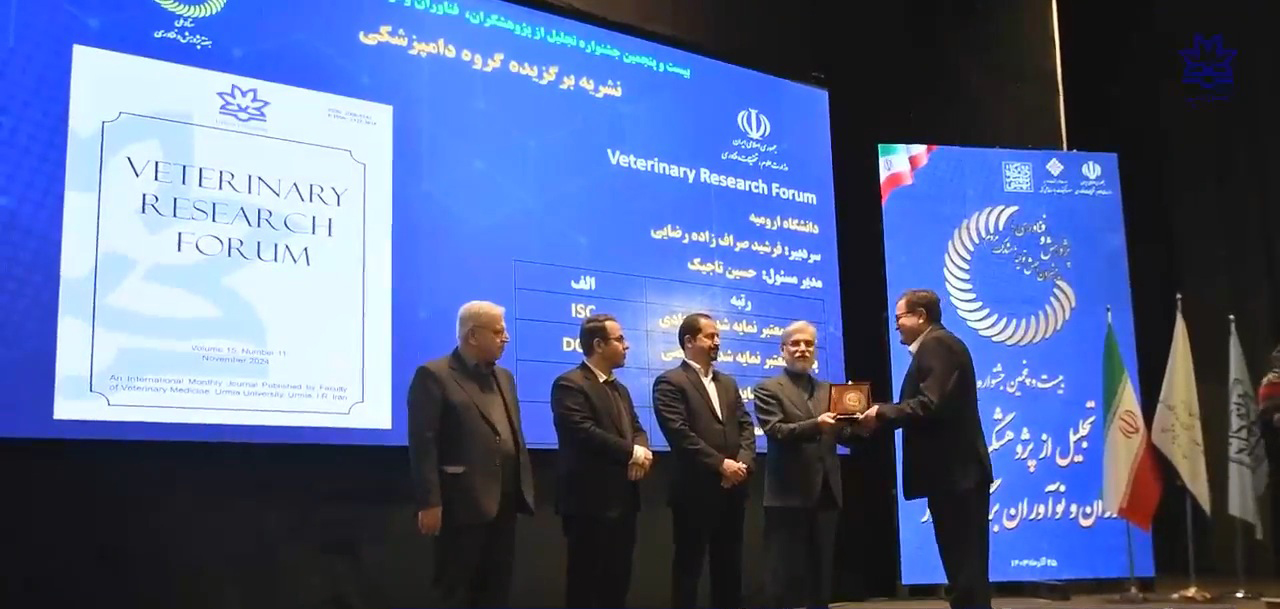
We are delighted to announce the election of Veterinary Research Forum as the top journal in the

25th Festival of Honoring Distinguished Technologists and Innovators.

In this festival, which was held in the presence of the Honorable Minister of Science, Research and Technology, 2024 at the International Conference Center of Shahid Beheshti University Tehran, Iran,
Professor Farshid Sarrafzadeh-Rezaei was honored as the editor-in-chief of the country's top scientific journal. 
 

Important notice 

Respected authors are strongly advised to take the time to read the Guide for Authors, otherwise, submissions not following the Veterinary Research Forum format will not be processed and
the manuscript will be rejected, immediately.


Pathology

Pathological, immunohistochemical and molecular studies on Chlamydia spp. in cattle, sheep, and goat abortions

Pages 71-79

Ibrahim Deniz, Ertan Oruc

Abstract This study, aimed to investigate Chlamydia abortus, C. pecorum, and C. psittaci in bovine, sheep, and goat abortions sent to the Konya Veterinary Control Institute diagnostic laboratory from various provinces in Central Anatolia and Mediterranean regions of Turkey between 2019 and 2022 via pathological and molecular methods. For this purpose, a total number of 150 abortions (from 58 cattle, 73 sheep, and 19 goats) were analysed via quantitative real-time polymerase chain reaction, histopathology and immunohistochemistry. The chlamydial DNA positivity rate was determined to be 24.00% via quantitative polymerase chain reaction analyses. According to the animal species, the positivity rate was 45.20% in sheep and 15.78% in goats. No cases positive for chlamydial DNA were found in the cattle abortions analyzed in the present study. When chlamydial agents were analysed on a species basis, C. abortus and C. pecorum were detected in 22.66and 1.33% of the cases, respectively. Among the animal species, 42.47% were C. abortus positive, whereas, 2.74% were C. pecorum positive in sheep. In the present study, the percentage of C. abortus-positive goats was 15.78%. and 22.66% of the Chlamydia spp. were positive according to immunohistochemical staining of aborted fetal lung, liver, heart, placenta and umbilical cord samples. This comparative study revealed that C. abortus was the most common chlamydial abortion agent in Türkiye. Chlamydial abortion agents cause abortion mostly in sheep in the region according to the animal species, and immunohistochemical staining contributes to the diagnosis of the agent at the Chlamydia spp. level.

Biochemistry

In silico molecular design of narrow-spectrum antimicrobial peptide XMK-8 and analysis of factors influencing its antibacterial activity

Pages 81-88

Hang Bolin, Zhu Qianlei, Zhou Yuqi, Mustalimu Mustafa, Wang Yuxin, Yan Yuting, Yu Man, Zhang Guoshuai, Zhang Jinrong, Li Jie, He Hongxuan, Chen Lin, Xia Xiaojing, Baoguo Liu

Abstract This study aimed to obtain a narrow-spectrum antimicrobial peptide. A peptide XMK-8 was designed based on the amino acid sequence of goose MyHC1 protein from positions 1919 to 1936 (some parameters do not meet the requirements of antimicrobial peptides through bioinformatics analysis) using bioinformatics tools and amino acid substitution method. The minimum inhibitory concentration was determined using liquid double dilution method, the hemolysis rate was determined using dilution method, and the effects of temperature, acid-base, enzyme, and salt ions on its antimicrobial activity were evaluated using liquid double dilution method. The results showed that the designed peptide was a cationic hydrophilic peptide with high amphiphilicity and low hemolytic activity on mouse red blood cells. It had no antimicrobial activity against Escherichia coli, Salmonella, Staphylococcus aureus, and Aeromonas hydrophila. The minimum inhibitory concentration against Pasteurella multocida was 250 μg mL-1, and the minimum inhibitory concentration against Haemophilus parasuis was 1.00 mg mL-1. The antimicrobial activity of the narrow-spectrum antimicrobial peptide XMK-8 can still be detected after treatment with temperature (0.00 - 100 ˚C), salt ions (sodium ions and potassium ions; 50.00 - 200 mmol L-1), pH (4.00 - 10.00), and protease K (20.00 - 100 μg mL-1). Antimicrobial peptide XMK-8 was expected to become a new alternative to antibiotics and would have good application prospects in the prevention and treatment of P. multocida and H. parasuis infections.

Theriogenology

Effects of the post-partum period on in vivo embryo production in Simmental cows

Pages 89-94

Elif Merve Çınar, Mehmet Ferit Özmen, İbrahim Küçükaslan, Mehmet Köse, Erkan Say, Ümüt Cirit

Abstract The aim of this study was to investigate the effects of post-partum (PP) periods of different lengths on super-stimulatory and super-ovulatory responses, as well as the number and quality of embryos in Simmental cows. Fifty cows were divided into five groups based on their PP days, including 50 - 60 days (n = 5), 61 - 90 days (n = 17), 91 - 120 days (n = 9), 121 - 150 days (n = 9), and 151 - 420 days (n = 10). On a random day of the estrous cycle, all follicles larger than 5.00 mm on the ovaries were aspirated and a progesterone-releasing device was inserted into the vagina of all donors. Approximately 36 hr after follicle aspiration, all cows were administered 500 µg of follicle-stimulating hormone in decreasing doses, twice daily for 6 days. Ovaries were evaluated using trans-rectal ultrasonography during human chorionic gonadotropin treatment and after embryo collection to assess follicles and corpora lutea, respectively. Super-stimulatory and super-ovulatory responses, as well as embryo yield and quality were found to be similar among cows in the PP days groups of 61 - 90, 91 - 120, 121 - 150, and 151 - 420. However, the embryo recovery rate and mean number of transferable and freezable embryos were adversely affected in cows at 50 - 60 days PP. The findings of our study suggested that day 60 PP served as a threshold for in vivo embryo production in Simmental cows.

Microbiology

Arctic-like lineage of rabies virus detected in Indian wild fox: a case study

Pages 95-101

Vivekanandan Vinitha, Paramasivam Raja, Aravind Krishnan Unni, Ramasamy Bharathi, Prasanna Koovlamnikarthil Subhadra, Divya Chandran, Sathish Gopal, Chittibabu Yamini, Manoharan Parthiban, Sivamurthy Parthiban, Gopal Dhinakar Raj

Abstract Rabies is a viral disease affecting both land-dwelling and flying mammals. In India, dogs have been the primary source of rabies. This study aimed to investigate the role of wild animals in the transmission and persistence of the rabies virus and analyse the viral genome to understand its characteristics. In the present study, a brain sample from a fox (Vulpes vulpes) found dead in the free-ranging area of Mannamangalam forest station, Thrissur, Kerala state, India, was collected for rabies screening by fluorescent antibody staining and molecular techniques. Viral proteins and nucleic acids were detected and the samples were subsequently analyzed using next-generation sequencing for characterization. The genome analysis revealed that the virus belonged to the type I genotype of the arctic-like lineage. The phylogenetic analysis indicated that the fox virus strain shared close homology with all Indian isolates irrespective of the host species and was clustered in the same arctic-like lineage, denoting the distribution of a similar lineage and genotype across all regions of India. The deduced amino acid variations of nucleoprotein and glycoprotein genes also revealed a pattern of similarity amongst isolates of Indian origin and differed from isolates of other geographical locations and lineages. This study based on genome-wide surveillance could offer novel insights into the genetic makeup of currently circulating strains in the human-wildlife conflict and their continuing spread and persistence of rabies. 

Pathology

Investigation of bovine herpesvirus 1 and bovine parainfluenza virus 3 in bovine pneumonia using polymerase chain reaction, double immunohistochemistry, and double immunofluorescence

Pages 103-110

Ayhan Atasever, Ali Güngör, Mustafa Özkaraca, Mehmet Özkan Timurkan, Turhan Turan

Abstract The aim of this study was to investigate the presence of bovine herpesvirus type 1 and bovine parainfluenza virus type 3 (PI-3) in cattle lungs exhibiting pneumonia symptoms observed during macroscopic examination. Polymerase chain reaction, double immunohistochemistry, and double immunofluorescence methods were used for viral detection. For this purpose, during the summer-autumn period of 2023, a total of 84 lung samples from cattle aged 1 year and older, exhibiting macroscopic signs of pneumonia, were collected in Kayseri province, Türkiye. Pneumonia lesions were recorded according to the anatomical locations. In virus detection, PI-3 was identified at a rate of 8.33% using double immunohistochemistry/immunofluorescence staining methods, while this rate was found to be 6.72% in polymerase chain reaction. Bovine herpesvirus type 1 was not detected by any of the three methods. In the cattle lungs, 44 lesions (52.38%) were detected in the apical lobe, while seven lesions (8.33%) were detected in the middle lobe, eight lesions (9.52%) in the accessory lobe, and 25 lesions (29.76%) in the basal lobe. The PI-3 immunopositivity was observed in alveolar epithelial cells, as well as mononuclear cells in the interstitial and peri-vascular regions. This study is the first to examine bovine herpesvirus type 1 and PI-3 presence in bovine lungs using three distinct validation techniques (polymerase chain reaction, double immunohistochemistry, and double immunofluorescence).

Physiology

Effects of different durations of high-intensity interval training or continuous training with/without metformin on lipid profile and malondialdehyde level in a rat model of polycystic ovary syndrome

Pages 111-118

Fatemeh Zolfaghari, Akbar Nouri Habashi, Safiyeh Aghazadeh

Abstract Polycystic ovary syndrome (PCOS) is a complex endocrine disorder. Exercise is one of the interventions that leads to PCOS improvement. This study aimed to investigate the potential of different durations of high-intensity interval training (HIIT) or continuous training (CT) with/ without metformin (MET) in a rat model of PCOS. For this purpose, the rats were randomly placed in seven groups, including control, PCOS, PCOS + CT, PCOS + HIIT, PCOS + MET, PCOS + MET + CT, and PCOS + MET + HIIT. The PCOS was induced by a single intra-muscular injection of 2.00 mg kg-1 estradiol valerate. The concentration of lipid indices showed that serum cholesterol and low-density lipoprotein decreased, and high-density lipoprotein increased with 8 and 12 weeks of exercise training in PCOS + CT, PCOS + HIIT, PCOS + MET + CT, and PCOS + MET + HIIT groups compared to the PCOS group, but no significant difference was found between groups. Triglyceride level decreased in treated groups with 12 weeks of exercise compared to the PCOS group, and there was no significant difference between the treated groups. Finally, serum malondialdehyde level decreased in groups received exercise intervention alone or combined with MET compared to the PCOS group. These findings revealed that HIIT and CT with longer periods with/without MET can lead to improvement of lipid profile and malondialdehyde level of PCOS patients. 

Biochemistry

Kinetic and thermostability modulation of Aspergillus flavus urate oxidase by proline and glycine osmolytes

Pages 119-125

Sima Jafari, Hossein Tayefi-Nasrabadi, Mehdi Imani

Abstract Hyperuricemia, caused by impaired uric acid excretion, poses significant health risks. Urate oxidase (UOX) from Aspergillus flavus offers therapeutic potential by converting uric acid into soluble allantoin; however, its instability limits clinical applications. This study investigated the effects of osmolytes, including proline and glycine, on the kinetics and thermostability of recombinant A. flavus UOX. Following the expression of UOX coding sequence in Escherichia coli BL21, it was purified using Ni2+-NTA agarose affinity chromatography and confirmed by sodium dodecyl sulfate–polyacrylamide gel electrophoresis. The enzyme maintained its activity up to 35.00 ˚ C and lost its activity at higher temperatures as it lost 70.00 % of its activity after 60 min at 40.00 ˚ C, and the enzyme with proline and glycine additives maintained 73.00% and 30.00% of the activity, respectively. The inactivation rate constant of enzyme (kin) was decreased in the presence of proline, indicating that the enzyme was more stable with proline, but glycine had no effect on kin. Half-life of enzyme was raised to 86 min in the presence of proline and the Michaelis constant (Km) was decreased significantly by both osmolytes, as well. These results demonstrated that proline stabilized UOX by mitigating thermal denaturation, likely through preferential hydration and hydrophobic interactions, while glycine enhanced substrate binding. The stabilizing capacity of proline highlighted its utility for inclusion in biopharmaceutical formulations, offering a solution to the persistent challenge of UOX instability in therapeutic contexts. These findings yielded practical strategies for enhancing both structural integrity and catalytic performance of enzymes in pharmaceutical development.

Parasitology

In vitro evaluation of activatable melittin encapsulated in liposome and albumin nanoparticles against Leishmania

Pages 127-133

Soheila Akhzari, Sedigheh Nabian, Mohammad Taheri

Abstract Leishmaniasis comprises a spectrum of clinical manifestations caused by protozoan parasites of the genus Leishmania, order Trypanosomatida. Cutaneous leishmaniasis remains a significant zoonotic disease prevalent in tropical and subtropical regions, particularly in developing countries. Despite ongoing research, a definitive cure for this parasitic infection is still needed. This study explored the potential of activatable melittin (AM) as a selective treatment for cutaneous leishmaniasis caused by Leishmania major. The AM was designed using PepFold and ExPASy servers, incorporating a matrix metalloproteinase -2/9 cleavable linker to target L. major-infected macrophages selectively. To enhance drug delivery and reduce potential toxicity, AM was encapsulated within albumin nanoparticles and liposomes. The anti-leishmanial efficacy of these formulations was evaluated at AM concentrations ranging from 25.00 to 100 µg mL-1 over 48 hr, with each experiment performed in 10 independent replicates (n = 10 per group). Statistical analysis using one-way ANOVA followed by Tukey's post-hoc test revealed a significant reduction in the average number of intracellular amastigotes per macrophage in the liposome-treated and albumin nanoparticle-treated groups (7.00 ± 1.50 amastigotes per macrophage) compared to the untreated infected control group (35.00 ± 3.20 amastigotes per macrophage). Treatment with 25.00 µg mL-1 of AM encapsulated in non-toxic albumin nanoparticles and liposomes demonstrated the most promising anti-leishmanial effect, resulting in an approximately 80.00% reduction in intracellular L. major amastigotes (compared to control).

Theriogenology

First report of acute reproductive disorder due to Mycoplasma suis in hyperprolific sows

Pages 135-139

Dung Thi Khanh Le, Tram Ngoc Thi Ngo, Dung Thi Thuy Do, Nam Minh Nguyen, Duy Tien Do

Abstract Reproductive failure is the major problem in modern pig production, significantly affecting economic productivity. This study investigated factors associated with reproductive failure in the hyper prolific pig farms, focusing on abortion, mummification, stillbirth and sudden increased sow death. Seven individual sows with reproductive failure clinical signs were surveyed to evaluate the infection rate with related pathogens. Results showed the highest frequency of Mycoplasma suis infections with reproductive problems along with blood samples being 100% positive, fetal mummification rate of 33.33% and stillbirth rate of 25.00%. Additionally, 28.57% of the total blood samples exhibited porcine circovirus type 3  infection, while other pathogens were not detected. The percentage of concurrent infections with M. suis and porcine circovirus type 3 in reproductive sow was 28.57%. The partial 16S rRNA Porcine Haemoplasma is a trivial name for haemotropic Mycoplasma spp., which can attach to the surface of red blood cells leading to deformity and anaemia in a wide range of mammalian animals including pigs. Haemoplasma sequences in this study was absolutely clustered into Haemominutum group. This study demonstrated the first case of acute reproductive disorder due to M. suis reported in imported hyper prolific sows.

Large Animal Surgery

Surgical treatment of a congenital rectal cystic hamartoma in a 20-day Kurdish foal

Pages 141-144

Saeed Azizi, Seyede Soraya Mahmoudi, Zahra Shamsi, Mohammad Akbari, Dara Azizi

Abstract Hamartomas are mostly benign tumor-like malformations characterized by a disorganized overgrowth of mature cells and tissues indigenous to the affected anatomical site. A 20-day-old male Kurdish foal was presented to the Veterinary Teaching Hospital of Urmia University, Urmia, Iran, with a history of hematochezia and tenesmus. Clinical examination identified a pedunculated tissue mass within the rectal lumen. The abnormal mass was surgically excised via polypectomy under local anesthesia. Tissue samples were obtained, fixed in 10.00% neutral buffered formalin, and processed routinely for histopathological examination. Histopathological evaluation of the resected tissue confirmed the diagnosis of a cystic polypoid rectal hamartoma characterized by normal rectal epithelium overlying multiple cystic, blood-filled vascular spaces. The foal recovered without complications and no recurrence was noted during a long-term follow-up exceeding 18 months. This report underscored that congenital rectal hamartoma, while rare, should be considered as a differential diagnosis in neonatal foals presenting with hematochezia or dyschezia. Prompt surgical intervention is curative and associated with a favorable prognosis. 

Parasitology

Assessment of oxidative stress biomarkers in Liver Fluke Dicrocoelium dendriticum following exposure to copper oxide and zinc oxide nanoparticles

Articles in Press, Accepted Manuscript, Available Online from 16 August 2025

Morteza Ghanbari, Farnaz Malekifard, Bijan Esmaeilnejad, Mehdi Fakhar

Abstract Dicrocoeliasis is a globally significant condition impacting both economic and public health. The lack of effective vaccines and the emergence of drug-resistant flukes have prompted research into alternative treatments. Metallic nanoparticles have recently been studied for their potential as anthelmintic agents. This research examines the anthelmintic activity of copper oxide (CuO-NPs) and zinc oxide nanoparticles (ZnO-NPs) against Dicrocoelium dendriticum in vitro. Using adult motility inhibition tests and oxidative stress biomarkers, including glutathione peroxidase (GSH), glutathione S-transferase (GST), superoxide dismutase (SOD), and malondialdehyde (MDA), this study evaluated the effects of CuO-NPs and ZnO-NPs. Flukes were treated with various concentrations of nanoparticles (1, 4, 8, 12, and 16 ppm) for 24 hr. CuO-NPs and ZnO-NPs demonstrated concentration- and time-dependent anthelmintic activity. Higher concentrations (12 and 16 ppm of CuO-NPs; 16 ppm of ZnO-NPs) significantly inhibited worm motility compared to controls. The nanoparticles induced oxidative stress in the flukes, with decreased SOD, GST, and GSH activity and increased MDA levels. Based on these findings, CuO-NPs and ZnO-NPs exhibit potential as therapeutic agents for controlling and treating D. dendriticum. However, further studies are necessary to assess their safety and efficacy in vivo for managing parasitic infections.

Parasitology

In vitro giardiacidal effects of Ziziphus vulgaris L. and Camellia sinensis (L.) extracts on Giardia duodenalis cysts

Articles in Press, Accepted Manuscript, Available Online from 25 October 2025

Kamal Taheri Lak, Farnaz Malekifard, Mohammad Yakhchali

Abstract There is an increasing interest in exploring plant extracts as potential new treatment options for these ailments. Ziziphus vulgaris L. and Camellia sinensis (L.) Kuntze are medicinal plants widely used in different traditional medical practices, especially in Iranian Traditional Medicine, for addressing a range of health issues. Although their biological properties are well-established, their effectiveness against Giardia duodenalis cysts is still uncertain. This research aimed to assess the impact of Z. vulgaris and C. sinensis extracts on G. duodenalis cysts in vitro and to compare their effectiveness with metronidazole. Cysts were extracted from stool samples and concentrated using a 0.85 M sucrose solution. Extracts of Z. vulgaris and C. sinensis were prepared at concentrations of 25, 50, and 100 mg mL-1. The impacts of these extracts at different concentrations were evaluated at 10, 15, 30, 60, and 180 min, and the results were compared to control groups. The collected data were documented and statistically analyzed. The findings revealed that Z. vulgaris extract at a concentration of 100 mg mL-1and C. sinensis extract at a concentration of 50 mg mL-1 showed similar effectiveness to metronidazole in eliminating Giardia cysts. In addition, the cytotoxic effects of Z. vulgaris and C. sinensis extracts, in comparison to metronidazole, indicated a rise in fatality rates with prolonged exposure times and higher extract concentrations (p < 0.05). Therefore, it can be concluded that extracts of Z. vulgaris and C. sinensis are as effective as metronidazole for killing Giardia cysts in vitro.

Theriogenology

Tannic Acid Ameliorates Sperm Quality and Testicular Damage in a Rat Model of Ischemia-Reperfusion

Articles in Press, Accepted Manuscript, Available Online from 15 November 2025

Hosna Ghaemi, Ali Soleimanzadeh, Rahim Mohammadi, Ali Shalizar

Abstract This study evaluated the protective effects of intraperitoneal tannic acid (TA) against ischemia-reperfusion (I/R) injury in a rat model of testicular torsion. Eighteen adult male Wistar rats were randomized into three groups (n=6 each): sham (surgery without ischemia), I/R (3 hr ischemia + 3 hr reperfusion), and I/R+TA (TA 50 mg kg-1; 100 µL i.p. 30 min before reperfusion). Testicular tissues were sampled immediately after reperfusion for biochemical assays to measure malondialdehyde (MDA), superoxide dismutase (SOD), and glutathione peroxidase (GPx) levels. Epididymides were analyzed 60 days later for sperm count, motility, viability, morphology, and DNA integrity. I/R significantly elevated MDA and sperm DNA damage while reducing SOD, GPx, sperm parameters, testicular weight and spermatogenesis. TA administration reversed these changes and restored the parameters to levels close to those of the sham group. Overall, intraperitoneal TA mitigated I/R-induced oxidative stress and preserved reproductive function, indicating its potential therapeutic value in testicular torsion.

Microbiology

In vitro Synergistic Efficacy of Postbiotics and Specific IgY Antibodies against Mycobacterium avium subsp. Paratuberculosis; Etiological Agent of Johne’s Disease

Articles in Press, Accepted Manuscript, Available Online from 17 November 2025

Mera Sharif, Naheed Mojgani, Nader Mosavari, Fattah Sotoodehnejad Nematalahi

Abstract Mycobacterium avium subspecies paratuberculosis (MAP), the causative agent of Johne’s disease and a potential contributor to Crohn’s disease, presents a significant challenge due to its resistance to conventional antibiotics. This necessitates the development of innovative strategies for prevention and treatment. This study aimed to evaluate the antibacterial activity of pathogen-specific antibodies derived from chicken egg yolks (IgY) and the postbiotics from lactic acid bacteria against MAP. Immunoglobulin Y antibodies were produced by immunizing hens with formalin-killed MAP strain antigens. The IgY was extracted, purified, and the anti-MAP titers were quantified by indirect ELISA. The Minimum Inhibitory Concentration (MIC) of different concentrations of specific anti-MAP IgY and the mixture of postbiotics (from four different probiotic strains Lactobacillus reuteri, Lactobacillus rhamnosus, Lactobacillus acidophilus, and Pediococcus acidilactici) individually and in combination against MAP was determined at various time intervals. Anti-MAP IgY titers in egg yolks increased within two weeks of immunization, reaching peak levels at six weeks. Growth inhibition assays revealed that postbiotics concentration as low as 6.25 mg mL-1 effectively inhibited MAP growth. Anti-MAP IgY demonstrated antibacterial activity with a MIC of 50 mg mL-1, while the combined IgY-posbiotics treatment achieved MAP growth inhibition at a MIC of 3.125 mg mL-1. The findings of the study suggests that combination therapy with specific IgY and postbiotics may be a promising preventive strategy for controlling MAP infections. Further in vivo studies are needed to elucidate the underlying mechanisms and optimize the application of this approach for broader use in veterinary and human medicine.

Small Animal Surgery

Effects of intraperitoneal administration of Kisspeptin-10 on ischemia-reperfusion injury in a rat testicular torsion and detorsion model

Articles in Press, Accepted Manuscript, Available Online from 31 December 2025

Niki Karvani Dilmaghani, Mehdi Behfar, Ali Soleimanzadeh, Farshid Davoodi

Abstract Testicular ischemia-reperfusion (I/R) injury during testicular torsion is strongly influenced by oxidative stress caused by excessive accumulation of uncaptured reactive oxygen species (ROS). Kisspeptin-10, a biologically active fragment of the kisspeptin peptide family, has demonstrated significant antioxidant and anti-apoptotic properties. Recent studies indicate that kisspeptin-10 can mitigate oxidative stress by reducing reactive oxygen species levels and enhancing the activity of endogenous antioxidant enzymes such as superoxide dismutase (SOD) and catalase. This study examined the effects of kisspeptin-10 on I/R injury in testicular torsion/detorsion (T/D) of male rats. Twenty male rats were divided into four groups: the control group and three treatment groups (720° T/D, 720° T/D+ 0.50 µg kg-1 kisspeptin-10, 720° T/D+ 1.00 µg kg-1 kisspeptin-10). After inducing 720° clockwise testicular torsion for 2 hr, various factors such as sperm parameters, number, total motility, viability, DNA damage and hypoosmotic test were evaluated. The results showed that 720° T/D can increase sperm DNA damage. In addition, it also had negative effects on overall motility and other properties such as viability and plasma membrane functionality. The results also showed that administration of kisspeptin-10 to T/D rats can reduce DNA damage. These effects could also increase overall motility, viability and plasma membrane functionality compared to the T/D group. Based on our results, kisspeptin-10 provides significant protection against acute T/D injury to the testis when administered after spermatic cord torsion in rat.

Physiology

Effects of thymoquinone on acute corneal and orofacial pain in rats: central involvement of opioid, cannabinoid, muscarinic cholinergic, and serotonin receptors

Articles in Press, Accepted Manuscript, Available Online from 01 January 2026

Esmaeal Tamaddonfard, amir Erfanparast, Afsaneh Niakani

Abstract Thymoquinone (TQ), the bioactive compound found in black seed, possesses beneficial properties. In the present study, the effects of oral administration (PO) of TQ were investigated on acute corneal and orofacial pain in rats. To clarify the central mechanism of action, muscarinic cholinergic, cannabinergic 1 (CB1) and 5-hydroxytryptamine 3 (5-HT3) receptor antagonists were delivered into the 4th ventricle of the brain after PO administration of TQ. Acute corneal and orofacial pain were induced by dropping of hypertonic saline (50.00 µL, 5.00 M) on the corneal surface and subcutaneous (SC) injection of capsaicin (1.50 µg, 20.00 µL) in the vibrissa pad, respectively. The eye wiping number and face rubbing duration were recorded as corneal and orofacial pain behavioral responses. Locomotor activity was measured using an open-field test. The TQ (5.00 mg kg-1) had no effects, while it reduced pain responses at 10.00, 20.00 and 40.00 mg kg-1. Intracerebroventricular (ICV) injections of naloxone (an antagonist opioid receptors), AM251 (an antagonist CB1 receptors), atropine (an antagonist of muscarinic cholinergic receptors) and ondansetron (an antagonist of 5-HT3 receptors) at a similar dose of 10.00 µg kg-1 inhibited corneal and orofacial pain suppression caused by 40.00 mg kg-1 TQ. The tested drugs did not affect locomotor activity. It is concluded that TQ caused analgesia in the acute corneal and orofacial pain. Central opioid, cholinergic muscarinic, CB1 and 5-HT3 receptors might be involved in the antinociceptive effects of TQ.

Theriogenology

Protective effect of the bee bread on cadmium-induced testicular toxicity in rats

Articles in Press, Accepted Manuscript, Available Online from 28 January 2026

Volkan Koşal, Turan Yaman, Çağlar Okulmuş

Abstract Cadmium (Cd) is a highly toxic environmental pollutant known to cause severe damage to the male reproductive system. This study aimed to investigate the protective effects of bee bread (BB), a natural product with antioxidant, anti-apoptotic, and anti-inflammatory properties, against Cd-induced testicular toxicity in male Wistar Albino rats. A total of 32 rats were divided into four groups: Control, BB (0.5 g/kg of BB), Cd (5 mg/kg of Cd), and Cd + BB (0.5 g/kg of pBB + 5 mg/kg of Cd) groups. Administrations via oral gavage were performed for 4 weeks. Semen analysis revealed significant reductions in sperm motility and density, along with increases in abnormal and dead sperm ratios in the Cd and Cd+BB groups compared to controls. Histopathological examination showed severe degeneration and desquamation of germ cells, tubular atrophy, and a decrease in spermatozoa in the Cd-treated groups. Polymerase chain reaction analysis indicated upregulation of apoptotic markers (Caspase-3, -8, and -9) and oxidative stress enzymes [catalase (CAT), superoxide dismutase (SOD1)] in the Cd and Cd+BB groups, while AR levels were reduced, signifying disrupted testicular function. BB administration partially mitigated Cd-induced damage, as evidenced by less severe histopathological changes and moderated gene expression alterations. However, the protective effects of BB were not sufficient to completely counteract the toxic impact of Cd. The study concludes that while BB has some potential in reducing Cd-induced testicular toxicity, its protective efficacy is limited, warranting further research to explore its therapeutic potential in combination with other protective agents.

Biochemistry

Chronological Profiling of Early Pregnancy Transcripts in Murrah Buffaloes

Articles in Press, Accepted Manuscript, Available Online from 28 January 2026

Aman Srivastav, R A Siddique, Vijai Singh, Atul Kumar Verma, Akhil Patel, Suresh Kumar, Mahesh Kumar Bharti, Aman Kumar

Abstract Effective reproductive management in cattle, such as cows and buffaloes, requires early and accurate pregnancy detection. Early identification of pregnancy enables farmers to promptly identify non-pregnant animals for treatment and/or rebreeding, thereby reducing the calving interval. This study aimed to standardize the expression of the CCL8 and CXCL10 genes as markers for early pregnancy detection in Murrah buffaloes. Blood samples were collected on day 16 post-artificial insemination (A.I.) for gene expression analysis and on days 0, 7, 14, and 21 post-A.I. for progesterone concentration measurement. Buffaloes were categorized as pregnant (n = 6) or non-pregnant (n = 6) based on the resumption of estrus. Gene expression levels in peripheral blood leukocytes (PBLs) were analyzed using qRT-PCR with SYBR green dye. Amplicons of CCL8, CXCL10, and GAPDH genes measured 108, 117, and 158 bp, respectively. Results showed that CCL8 mRNA expression in pregnant buffaloes was 5.13 and 12.21 times higher compared to non-pregnant buffaloes, while CXCL10 mRNA expression was 4.19 and 22.17 times higher. These findings indicate significantly elevated CCL8 and CXCL10 mRNA expression levels in PBLs of pregnant buffaloes on day 16. Progesterone levels in the pregnant group increased significantly (p < 0.05) from day 0 to day 21, while no significant differences were observed between groups on days 0, 7, and 14. Pregnancy was further confirmed via per-rectal examination on day 45 post-A.I. Therefore, CCL8 and CXCL10 gene expression profiling on day 16 can serve as reliable early pregnancy markers in Murrah buffaloes.

Clinical Pathology

Epidemiological and Compositional Analysis of Urinary Bladder Stones in Dogs and Cats: A Five-Year Retrospective Study

Articles in Press, Accepted Manuscript, Available Online from 28 January 2026

Hamed Mansoor Lakooraj, Mohammad Honarjoo, Siamak Zarei, Mana Moheimani

Abstract This study provides a comprehensive analysis of 145 urinary bladder stone cases diagnosed in dogs and cats over a five-year period at a private veterinary hospital. The aim was to evaluate demographic patterns, urolith composition, and species-specific trends to enhance understanding and improve management of urolithiasis in companion animals. A retrospective study was conducted on clinical records, including patient demographics (species, breed, age, sex), urolith composition, and stone size. Chemical composition of uroliths was determined using qualitative chemical analysis. Statistical analyses were performed to identify significant associations between patient demographics and urolith composition.
Of the 145 cases, 80 were dogs (55.2%) and 65 were cats (44.8%). In dogs, calcium oxalate stones predominated (65%), followed by struvite stones (30%) and mixed compositions (5%). Conversely, cats exhibited a higher prevalence of struvite stones (55%), with calcium oxalate accounting for 40% and mixed stones for 5%. Larger stones (10–20 mm) were more common in female dogs, while cats generally presented with fewer and smaller stones. No statistically significant temporal trend in urolith composition was observed for either species during the study period. Stone color distribution varied by species, with cream and brown stones being most common in dogs and cats, respectively.
This study establishes baseline epidemiological data on urolithiasis for this region, revealing significant species-specific differences in stone composition. The high prevalence of calcium oxalate in dogs and struvite in cats highlights the need for tailored clinical management and provides a crucial benchmark for future regional and global comparative studies.

Microbiology

Identification of Chlamydia abortus, Coxiella burnetii, and Brucella Species from Ruminant Fetal Abomasal Contents by PCR Methods

Articles in Press, Accepted Manuscript, Available Online from 28 January 2026

Ayfer GÜLLÜ YÜCETEPE, Sadiye Dılşa ATEŞ, Özden DELLAL, Osman Yaşar TEL, Oktay KESKİN, Ahmet Murat Saytekin, Sibel KIZIL, Ufuk ÜLKER, Efsun Melike ÇEÇEN, Sevil ERDENLİĞ GÜRBİLEK

Abstract Aim: The aim of this study, conducted between 2020 and 2023, was todetect Coxiella burnetii, Chlamydia abortus, and Brucella species in abomasal contents of aborted foetuses of ruminants from different parts of the Central Anatolia region in Türkiye using PCR.
Methods and Results: The abomasal contents of a total of 97 aborted fetuses from cattle, sheep, and goats with a history of abortion, collected between the years 2020 and 2023, were tested in this study. As a result of PCR analysis of 97 abomasal contents, 4 (4.1%;95%CI:1.33–10.82) of them were C.abortus, including 3 sheep and 1 goat. Two (2.1%; 95% CI: 0.36–7.96) of them were C. burnetii, including 1 sheep and 1 cattle. A total of 60 (61.9%;95% CI:51.4–71.37) samples from 47 cattle, 9 sheep, and 4 goats were determined by Brucella genus-specific PCR. The multiplex PCR was used for identification of different species of Brucella spp. Following multiplex PCR analysis of the positive Brucella spp. samples, 39 (65%;95%CI:51.52–76.55) samples were identified as B. abortus, including 2 sheep, 1goat, and 36cattle. Additionally, 19 (31.7%;95%CI:20.6–45.09) isolates were identified as B.melitensis, including 5 sheep, 2 goats, and 12 cattle. In two sheep samples, both B.melitensis and C.abortus were identified from the same animals.
Conclusions: In conclusion, Brucella spp. was found to be the most prevalent pathogen causing abortions, with C.abortus contributing substantially. Effective control strategies under the One Health approach are essential to prevent the uncontrolled spread and interspecies transmission of these zoonotic agents in the region and country.

Microbiology

Molecular investigation of biofilm-forming genes in staphylococci isolated from dogs in Ilam, Iran

Articles in Press, Accepted Manuscript, Available Online from 28 January 2026

Negar Soltani, Mostafa Nemati, Fazel Pourahmad

Abstract Abstract
Biofilm formation is a key virulence factor in Staphylococcus aureus, contributing to bacterial persistence, antimicrobial resistance, and chronic infections. This study aimed to investigate the presence of biofilm-associated genes (fib, fnbA, fnbB, clfA, and clfB) in S. aureus isolates from dogs in Ilam, Iran. From December 2022 to September 2023, 250 swab samples were collected from nasal, oral, and rectal sites of dogs, yielding 81 S. aureus isolates confirmed by polymerase chain reaction (PCR) amplification of the nuc gene. The prevalence of biofilm-associated genes varied, with clfA, clfB, and fnbA detected in 98.8% of isolates, fib in 63.0%, and fnbB in 16.0%. Notably, fnbA, clfA, and clfB were present in all rectal isolates, while fnbB was absent in this group. The findings highlight the widespread presence of biofilm-related genes in S. aureus from dogs, suggesting their potential role in colonization and zoonotic transmission. The high prevalence of adhesion-associated genes underscores the need for monitoring biofilm-forming S. aureus in companion animals to mitigate antimicrobial resistance and public health risks.

Parasitology

The effectiveness of Harmaline along with meglumine antimoniate on Leishmania major

Articles in Press, Accepted Manuscript, Available Online from 28 January 2026

Mahin Ghafourzadeh, Mohammad Mirzaie, Iraj Sharifi, Alireza Keyani, Ehsan Salarkiya

Abstract Leishmaniasis, a disease caused by Leishmania species and transmitted via sandflies. Current control strategies against reservoir hosts and vectors are not eco-friendly. Using Harmaline (HA) from Peganum harmala, and meglumine antimoniate (MA) could be a promising therapy. The study aimed to explore the potential treatment outcomes and action mechanisms of HA and MA against L. major stages by investigating their effectiveness through molecular docking, anti-leishmanial effects, safety assessment, and apoptotic profile evaluation. According to the molecular docking results, the PLIP ligand interaction profiler (PLIP) identified that Bcl2 interacts with HA mainly through hydrogen bonds, while Bax uses both hydrogen and hydrophobic interactions, indicating a stronger binding of HA to Bax compared to Bcl2. HA, combined with MA (HA/MA) showed potent anti-leishmanial activity without toxicity. In vitro studies significantly demonstrated that HA inhibited the growth of promastigotes and amastigotes. HA/MA was more effective in inhibiting parasite growth. Based on the study findings, HA and HA/MA mixture can be considered a viable treatment option for cutaneous Leishmaniasis.

Large Animal Internal Medicine

Glandular Gastric Disease Prevalence in Equids (Horses, Donkeys and Mules) and other gastric findings: Post-mortem comparative study

Articles in Press, Accepted Manuscript, Available Online from 28 January 2026

Angie Lorena Medina Bolívar, Rafael Faleiros, Jose Martinez Aranzales

Abstract Abstract
Equine Glandular Gastric Disease (EGGD) has limited prevalence studies and scarce understanding of the predisposing factors and pathophysiological mechanisms involved. The objectives of this study were to determine and compare the postmortem prevalence of EGGD and other gastric lesions in Colombian equids, specifically horses, donkeys, and mules. The study utilized a sample of 300 equine stomachs, with 100 specimens from each group, collected immediately after slaughter. The postmortem examination included a thorough inspection of the ventral fundus, the adjacent area of the margo plicatus, and the pyloric antrum of the glandular mucosa, carefully identifying any lesions or abnormalities. The results showed that the overall macroscopic presence of EGGD in the equid population was 68.3% on average, with specific rates of 45% in horses, 77% in donkeys, and 83% in mules, with lesions predominantly affecting the fundus and pyloric antrum regions. Inflammatory processes were observed to be similar between donkeys and mules, while horses exhibited distinct inflammatory patterns in the glandular mucosa. Additional gastric findings, such as gastritis (85.3%), gastric impaction (10%), and parasitic infections (13.3%), were also documented during the study. The findings suggest that EGGD is prevalent across all three groups of equids. The inflammatory conditions and their distribution are similar in horses and donkeys, although differences in the location, frequency, and severity of mucosal lesions were observed among the three species.

Theriogenology

Enriching egg yolk fractions-Tris-based extenders with cow skimmed milk improved the cryopreservation of bull sperm

Articles in Press, Accepted Manuscript, Available Online from 25 February 2026

Farhad Samadian, Farhad Farrokhi-Ardabili, Mohammadhasan Neteghahmadi, Mostafa Ghaderi Zefrehei

Abstract The effects of substituting whole egg yolk (WEY) in a Tris-citrate-based extender with two derived fractions—a buffer-soluble fraction (BSF) and an ammonium sulfate insoluble yolk fraction (ASIF)—on the freezability of bull sperm were investigated. The BCF and ASIF levels of egg yolk in the respective diluents were consistent with their extracted values from an equivalent volume (20%) of egg yolk in the control diluent. The extenders were then enriched with 0.00%, 5.00%, and 10.00% (v/v) of pasteurized skim milk. Semen samples were collected weekly over five consecutive weeks from six adult bulls, and the standard ejaculates were pooled. The pooled semen was subsequently divided into seven experimental extenders and frozen in 0.5 ml French straws. Various sperm quality parameters, including kinematics, acrosome integrity, capacitation, and DNA fragmentation, were evaluated post-thawing. Results indicated that sperm kinematics and the percentage of acrosome-reacted sperm in experimental extenders were not significantly different from those in the control group. The milk-free ASIF extender exhibited higher percentages of capacitated but lower percentages of spermatozoa with intact DNA compared to the WEY extender sperm (p < 0.05). The addition of 10.00% milk into the BSF diluent resulted in a significant increase in the proportion of sperm with intact DNA (p < 0.05) and a notable decrease in the percentage of sperm with partially fragmented DNA compared to the control (p < 0.05). In conclusion, a BSF extender enriched with 10.00% cow's skimmed milk is recommended as a substitute for WEY in the cryopreservation of bull semen.

Immunology

A review of inflammatory bowel diseases in humans and pets: treatment strategies

Volume 16, Issue 11, November 2025, Pages 601-610

Seyyed Meysam Abtahi Froushani, Sayyed Jafar Hasani, Milad Ghaderi, Leila Mahmoudzadeh

Abstract Inflammatory bowel disease (IBD) encompasses a group of chronic inflammatory conditions that primarily impact the gastrointestinal system. While ulcerative colitis and Crohn's disease are the principal manifestations in humans, animals frequently exhibit lymphocytic-plasmacytic enteritis/colitis and eosinophilic enteritis/colitis. Growing evidence suggests a complex interplay among genetic predisposition, gut microbiota imbalance and abnormal immune responses to intestinal microbes in susceptible individuals. This intricate involvement results in remarkably similar clinical presentations across species. Patients often experience symptoms such as diarrhea, vomiting, weight loss and anemia. Extraintestinal manifestations including uveitis, skin rash and arthritis may also occur. Endoscopy and biopsy typically serve as the gold standard for confirming the diagnosis and differentiating it from other gastrointestinal disorders in humans and animals. The treatment approach generally focuses on managing disease activity through immunosuppressive medications such as glucocorticoids, administered at appropriate dosages. However, the precise cause of IBD remains a topic of ongoing research. With the emergence of additional treatment options like herbal compounds and fecal microbiota transplantation, which have demonstrated effectiveness in restoring gut health in IBD patients, there is optimism for novel therapeutic strategies. Ultimately, conclusion is that chronic gastrointestinal conditions like IBD are complex in both human and veterinary medicine. These diseases share numerous common pathophysiological features, yet, diagnostic and treatment challenges continue to exist.

Surgery

Evaluation of chemical castration by intra-testicular injection of zinc-doped carbon dots in mature rats

Volume 16, Issue 12, December 2025, Pages 681-689

Mohammad Hossein Farjah, Mehdi Behfar, Ali Soleimanzadeh, Ali Shalizar-Jalali, Rahim Molaei

Abstract Sterilization in animals serves multiple purposes, such as behavior control, performance improvement, and population management. Chemical sterilization has emerged as a promising non-surgical alternative to traditional methods. This study aimed to investigate the effects of intra-testicular injection of zinc-doped carbon dots (Zn-CDs) nanoparticles as a chemical sterilant in mature rats. Twenty-five rats were randomly divided into five groups, including a control group without injection, a sham group receiving 0.50 mL distilled water, and three treatment groups administered respectively 0.50, 2.00, and 8.00 mg kg-1 of Zn-CDs synthesized through a hydrothermal process. Following anesthesia with ketamine and xylazine, and aseptic preparation, intra-testicular injections were administered bilaterally. At 60th day post-injections, blood samples were collected to measure serum testosterone levels using chemiluminescence immunoassay. The rats were then surgically castrated to assess sperm parameters and testicular histopathology. Testicular oxidant/anti-oxidant status was also evaluated. The results revealed a dose-dependent reduction in sperm viability, membrane integrity, and motility, accompanied by increased sperm DNA damage. The highest Zn-CDs dose caused the most significant decrease in sperm concentration, as well as severe testicular tissue damage. In addition, anti-oxidant capacity, seminiferous tubules maturation, testosterone production, and spermatogenesis declined with increasing Zn-CDs concentrations in a dose-dependent manner. These findings indicate that intra-testicular injection of Zn-CDs effectively induces infertility in mature rats and holds potential as a chemical sterilization method. With further studies to evaluate safety and efficacy, this approach could be developed as a practical solution for large-scale in situ castration, offering a non-surgical alternative for over-population control programs.

Microbiology

In vitro physicochemical characterization of nephropathogenic strain of infectious bronchitis virus isolated from poultry

Volume 16, Issue 12, December 2025, Pages 675-680

Kamran Saaed, Faisal Ayub, Muhammad Arshad Durrani, Abdul Rafay, Mobashra Mustafa, Irtaqa Gull, Zahra Rafi, Muhammad Kashan Ansari, Muhammad Mubashar Beig, Abdul Razak, Hafiz Muhammad Moavia Atique

Abstract Infectious bronchitis virus (IBV) is an important pathogen in the poultry industry causing avian infectious bronchitis that is, an acute but highly contagious disease affecting the upper respiratory tract, kidneys and reproductive tract. The 3rd passage of a polymerase chain reaction confirmed nephropathogenic IBV isolate was used for this study. Heat stability for 5, 10, 15, 20, and 30 min at 56.00 ˚C, pH sensitivity at pH 3.00, 7.00, 9.00, and 11.00 ultraviolet (UV) irradiation for 10, 15, 20, and 30 min, and chloroform sensitivity were studied. The IBV isolate was found to be susceptible to a temperature of 56.00 ˚C for 5 min and above, UV irradiation within 10 min, chloroform treatment and to pH 11.00 while being resistant to pH 3.00 and 9.00. The second part of the study investigated in vitro effectiveness of the disinfection potential of several commercially used disinfectants in Pakistan against the IBV isolate. For this purpose, Virkon S, Bromosept, and Beloran were employed for the virus inactivation test. Following the IBV challenge for contact time of 1, 5, 10, and 30 min, we counted the number of embryos that died after incubation. Results showed that suitable dilution of disinfectant for the recommended contact period could kill the virus. The maximum susceptibility was seen in the case of Virkon S which killed the virus in just 1 min. Thus, IBV could be killed using commercially available Virkon S, Beloran, and Bromosept after being used in recommended concentrations for recommended contact time.

Small Animal Internal Medicine

Severe hepatic lipidosis in a dog: a case report

Volume 16, Issue 12, December 2025, Pages 719-723

Farzin Abbasi, Alireza Jafarbeglou, Siamak Asri-Rezaei, Seyede Soraya Mahmoudi, Farshid Davoodi, Abbas Raisi

Abstract Hepatic lipidosis (fatty liver) is a rare condition in dogs, primarily caused by improper feeding and care practices. It involves the accumulation of triacylglycerols in hepatocytes due to various toxic factors and dietary carbohydrate deficiencies. This case report describes the clinical, hematological, and pathological findings of an abandoned 8-year-old dog suffering from hepatic lipidosis that was referred to an animal shelter. The dog was unconscious, immobile, depressed, and severely obese. Pronounced abdominal distension and icteric mucous membranes were immediately noticeable during the initial examination. A blood sample was collected, and the case was referred to a veterinary hospital for diagnostic imaging. Unfortunately, before the referral could be completed, the dog suddenly died. Immediately following the death, a postmortem necropsy was performed to determine the cause. Necropsy revealed an extremely enlarged liver with a yellowish discoloration and abnormal kidneys with nodular lesions. Based on these findings, fatty liver was strongly suspected. Complete blood count and biochemical parameters, including triglycerides, cholesterol, aspartate transferase, alanine transaminase, and alkaline phosphatase, were subsequently evaluated. Complete blood count results indicated leukocytosis, thrombocytopenia, and an increase in red cell distribution width. Biochemical analyses revealed hypertriglyceridemia and elevated levels of alanine transaminase, aspartate transferase, and alkaline phosphatase. Histopathological examination confirmed severe fatty degeneration in the liver, alongside marked degenerative and necrotic changes in the kidneys. The findings of the present study contribute to the limited data on canine hepatic lipidosis and underscore the necessity of raising awareness about its clinical presentation, diagnostic markers, and histopathological characteristics.

Theriogenology

In vitro effects of alpha-ketoglutarate and folic acid supplementation on bull sperm exposed to ammonia stress

Volume 16, Issue 11, November 2025, Pages 629-638

Abolfazl Ashoori, Adel Saberivand, Ali Soleimanzadeh, Mustafa Numan Bucak, Maryam Saberivand

Abstract This study examined the effects of alpha-ketoglutaric acid (AKG; 2.00, 4.00, and 8.00 mM L-1) and folic acid (FA; 50.00 nM L-1) on bull sperm cells under ammonia stress induced by 175 µM L-1 ammonium chloride. Sperm parameters including kinematic motility, survival rate, membrane integrity, DNA integrity, superoxide dismutase (SOD), glutathione peroxidase (GPx), catalase (CAT), total antioxidant capacity (TAC) activities, and apoptosis were assessed in the groups. Sperm motility indices, survival rate, plasma membrane integrity, SOD, CAT, TAC, and GPx enzymes activity, DNA damage, and apoptosis in the treated groups were significantly differed from those in the control groups. The AKG concentrations of 4.00 and 8.00 mM L-1 co-supplemented with 50.00 nM L-1 FA mitigated the negative effects of ammonia on sperm cells. This study indicated that supplementation with AKG and FA at the desired concentrations counteracted the adverse effects of ammonia toxicity that preceded clinical signs. Further studies are needed to evaluate the fertility of these sperms, either in vitro or in vivo.

Journal Metrics (Real-time)

Acceptance Rate: 16

Number of Submissions: 4,029

Number of Contributors: 3,526

Accepted Submissions: 661

Article View: 1,495,080

PDF Download: 1,074,219

Time to Accept (Days): 139

Number of Indexing Databases: 28

Number of Reviewers: 2637

Publication Information

Keywords Cloud